Showing posts with label Matt Romo Evaluation. Show all posts

Monday, 24 March 2014

Evaluation: Question 1 - Conventions and Real Media


Question 1: In what ways does your media product use, develop or challenge forms and conventions of real media products?


Many different aspects of our opening sequence were inspired by real media products (mainly film, and some TV), either specific things we liked or just generally to make our product recognisable as an opening sequence to a film. In other aspects we consciously chose to be less like conventional media products, challenging or developing conventions.


Our film, 'Consequences', is the story of Dan, the protagonist, and the issues he faces being a teenage boy in London, including the apparent death of his girlfriend Lucy's brother, Ryan which happens accidentally. We researched and drew from our knowledge in order to make a successful opening to the film. 


Genre


Here is a 'Bubbl' brainstorm of the drama genre focused on British drama and expanding upon points relevant to our film:


Some of the above conventions that we incorporated include:

  • Teenagers having relationships, having problems and being independent
  • Themes of crime
  • Enigmatic, suspenseful music
  • Urban location


Our film is a 
British drama with sub genres of urbancrime, and teen.

The setting represents and conforms to this, with our opening being shot in Walthamstow, an urban, East London area with terraced housing being prominent. The location is typically British and has association with crime, particularly that of young people, for example films in reference to the 2011 Summer riots, featuring in Ill Manors. Cities are often represented as full of problems (we conform to this) such as crime involving gangs, or drugs like in Trainspotting, where heroin addiction is dealt with - different to 'Consequences' in terms of the issues but there are similarities: 


Narrative

Generally, films comply with Todorov's theory of narrative structure, i.e. equilibrium, disruption, new equilibrium. Our opening challenges this convention similarly to the film Trainspotting, where the first shot is of the protagonist running away from something; opening with a flash-forward to the disruption, despite the equilibrium being shown in our film in imperfect chronological order. This also has some similarity to urban British TV crime-drama Luther, where in each episode the first scene we see is the crime (disruption) unlike in our film, and chronological order is maintained.


The above diagram shows our narrative structure vs theory, with reference to our opening sequence where it is relevant in the structure (largely the beginning).


Propp's character theory
Vladimir Prop constructed a character theory in 1928 by reading folk/fairy tales, of stock characters that set up the narrative, many of which will always feature in a film. Here are some ways in which we conform to this:

  • Dan- the hero; he is the protagonist who is the focus, trying to put right his wrongs
  • Lucy- helper/princess; aids Dan in his struggle and his problems but also a love interest however princess role is challenged as Lucy is not just an objectified 'reward' for Dan
  • Ryan- the dispatcher; beginning Dan's journey by his fate of being the victim
  • Jamie- the false hero; leading Dan astray 

Levi-Strauss' binary opposites theory
Theorist Claude Levi-Strauss stated that narratives could be reduced down to binary opposites. Some examples in relation to 'Consequences':

  • Good vs Evil
  • Denial/trying to escape problems vs acceptance 
  • Equilibrium vs disequilibrium
  • Peace vs conflict 

Roland Barthes' enigma codes
Theorist Roland Barthes claimed that any media/text portrays mysteries in order to draw the audience in, forcing them to ask questions that they want to know the answers to. E.g:

  • Why is he running? - similar thoughts to the audience of Trainspotting at the start
  • What is he in fear of/worried about? 
  • Who's house is this?
  • Who are 'the boys'?
  • Who got hurt/how/how badly?
  • Who is Ryan?
  • Who is knocking at the door?
We keep aim to the audience gripped, engaged and excited using a cliffhanger right at the end, continuing to leave many of these questions unanswered.


Style/Form

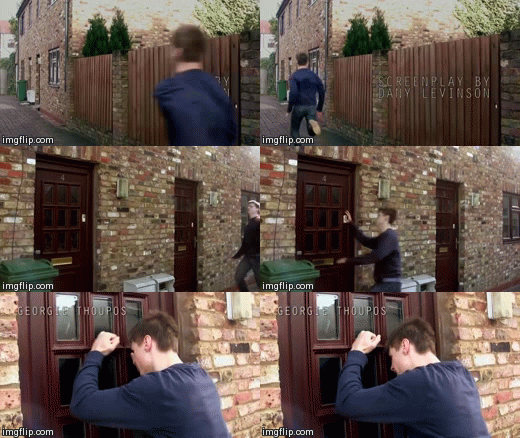
Our titles compared to those in This Is England


Two of our titles react to movement from characters (Dan) similar to Zombieland but with far less advanced special effects. Different genre but similar target audience


Dramas aim to grip their audiences and keep them engrossed in the narrative rather than have them bored and disinterested. One of the ways they do this is to use varying shot types, a convention we applied to Consequences.


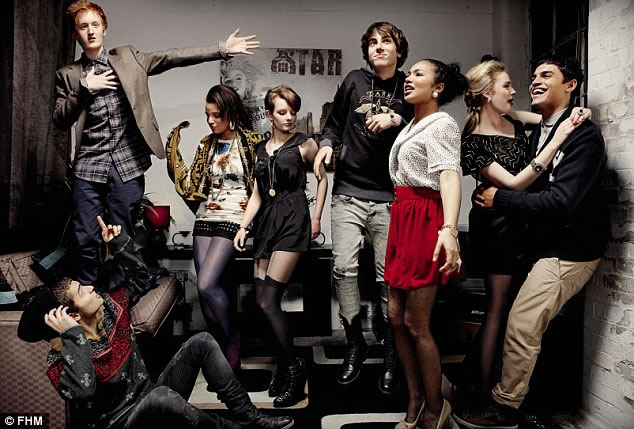
Natural, outdoor lighting and grading being used to convey that the drama is realistic and gritty - similar to Skins and other dramas, shown by these two stills. Grading used only to make colours truer to real life.


We do conform to many conventions of real media but also develop and challenge some with use of quite unconventional characters (more information in representation and audience appeal questions), less commonly used story/narratives for an urban setting

Evaluation: Question 2 - Representation


Question 2: How does your media product represent particular social groups?


Our main focuses of representation were age and gender, which we aimed to provide both relatable, realistic, and modern representations of.


We both challenged and used conventional
representation in our opening.


Characters:
- Teenagers getting into trouble = Conformed
- Teenagers being in relationships = Conformed
- Strong female character 
Not Conformed
- Female with an interest in football 
Not Conformed


Age

Teenagers are often portrayed as troublemakers who party and drink, doing illegal activities like in British teenage drama Skins, where for example Sid buying drugs in the first episode of series 1.

We find out Dan is in trouble during our opening sequence's dialogue, possibly being involved in accidentally seriously hurting someone or even committing manslaughter. 


We decided to not group characters into social groups like 'nerds', 'jocks', etc like in other dramas aimed at teenagers such as Beaver Falls, or in films such as Mean Girls as it would not have suited our context or our small cast. Another stereotype we challenged was the common representation of teenagers being involved in dealing or recreational use of drugs like in Ill Manors; we do not show any such behaviour from our characters or imply it.


Gender
Dan, our male character is the one who is in trouble, which does generally conform to stereotypes of young males, also similarly to characters like Sid and Freddie in the TV show Skins, which provides representations of teenagers in terms of both age and gender. More similarly to Freddie's character in Skins series 3 and 4, Dan also appears to have difficulties emotionally and within his relationship, made evident by Lucy saying "I don't want to be involved in your shit anymore".

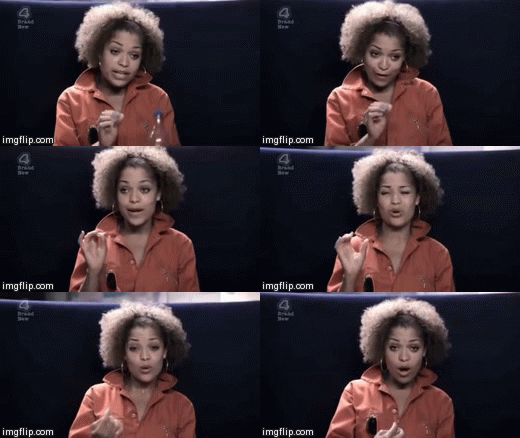
                       Alisha in Misfits
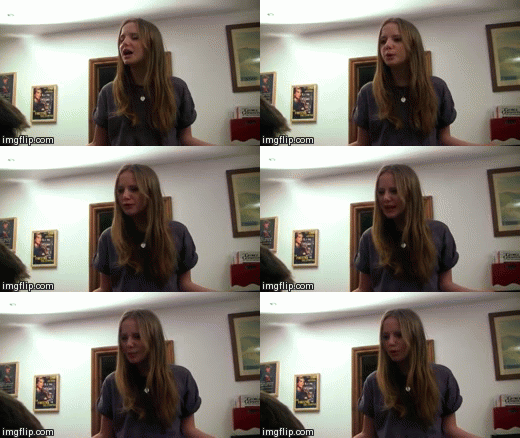
Lucy in 'Consequences'  

Lucy challenges and develops, as well as conforms to stereotypes of females; she seems quite dominant in her relationship with Dan, but as one might expect to see, she is emotionally affected by the news about her brother. Some aspects of her character are more commonly associated with males; we see her watching football before Dan arrives, and uses physical body language and commanding tone when standing and pointing to say "get out!".

Gang culturegang
Gang culture being represented above in Attack the Block (left) and Bullet Boy (right)


As a collective....
Some common representations tie in across multiple aspects of representation, e.g. gang culture. This has reference to gender, class, age, race and setting; a negative stereotype being groups of young black males from disadvantaged social backgrounds, living in run-down inner city areas being involved in gang culture. This oversimplified and often incorrect interpretation of an extremely complex issue was a reason we steered away from gang culture as a theme we would tackle. We felt we could not sufficiently tackle gang culture as a theme also due to difficulty managing a large cast, and also our inconsistent understanding of it as a group.
Evaluation: Question 3 - Institutions


Question 3: What kind of media institution might distribute your media product and why?


From being taught how vital institutions are in a film's development and success from pre-production to post-release, we were aware that the decisions we made needed to be informed and educated in order to be appropriate to our film idea.


Below is a 'Prezi' presentation I made explaining our main institutional choices:


'GEMM Productions' share similarities also with producer Film4, a much larger version of what we aspired to be comparable to. They have produced films like Submarine, This Is England, Attack The Block, 12 Years A Slave and The Inbetweeners Movie. sharing similarities in either serious content, drama genre, teenage/young adult audiences, or combinations of these. Unlike major studio productions common in Hollywood, we would rely on challenging themes, good acting, and intelligent plot lines - a convention of independent films - rather than huge name actors and expensive SFX.


Marketing

Through StudioCanal, we would market our film nationally with strong use of social media such as Facebook, Twitter, and Instagram. Short-form entertainment such as trailers and interviews with cast would be uploaded to YouTube as our teenage/young adult audience frequently use this media platform 'on the go' wherever they are, accessing it from smartphones as well as laptops and computers at home. All of this would be linked from a Facebook page as the central hub of our campaign. Below is an example from The Double (2013) similar to what we would aim for:


StudioCanal's Facebook page for The Double sharing links to related content as well as using Hashtags (#) to link to mentions of the film on Instagram, Twitter, and elsewhere on Facebook. We share target audience age with this film and would address them similarly.


Traditional above-the-line marketing such as TV adverts, posters and billboards would be difficult to fund for us nationwide, but a limited poster campaign would be possible. This would probably only be present in cities such as London and Manchester as our main audience resides there and it would be difficult and expensive to try to reach rural audiences of our age group in more remote areas of the UK. We would use a simple but powerful poster also similarly to Richard Ayoade's The Double, placed in some bus stops and tube stations in cities for example, raising awareness to our audience as they commute to school, work, or university.

We would begin the poster campaign and start posting on the Facebook page a few weeks prior to film release - typical of independent films - as opposed to months of  campaigning as many high-concept, well financed studio films do. The posters would last the duration of the film's time in cinema. The Facebook page would remain to promote a DVD release and online streaming. While it is out in theatres,  the page would post positive audience and critical responses to continue to attract its audience. Social media popularity with 16-24s means we can reach them across the UK, with viral potential of our 
                                                                                    page as its content is shared - all for free.


Release

'Consequences' would be released in a small number of cinemas in only in major cities in the UK e.g. London, Glasgow, Birmingham, Leeds, Manchester, Liverpool, etc from just before the start of the 2014 school Summer holidays, as members of our audience in school or university will be freed up to watch our film in the cinema. It would be released for a limited time only - 2 weeks - as the audience numbers attracted by the relatively small campaign will not be able to sustain sufficient ticket sales for any longer than this.


Post Release

After hopefully getting a deal from cinema chains such as Cineworld, Vue and Odeon in Britain, our film could have rights to stream bought by websites such as Love Film and Netflix, allowing our audience to consume the media product on more platforms such as mobile, tablet and PC/Mac.


We accept the high likelihood that our film will be streamed illegally on websites such as Pirate Bay and uTorrent, as our core 16-24 year old audience are tech savvy and often view films in this way. Another reason this is likely to happen is because the cinema release would probably be very limited, giving less people the opportunity to watch it there, and meaning consumption via other media increases in probability. Despite the fact that free, illegal streaming decreases our profits, it does lead to more views and better potential to receive critical acclaim, and perhaps reputation as a 'cult classic'.


I believe our institutional choices were realistic and believable due to wide as well as in depth research into institutions, and some of the films they were behind. This gave us a good platform and reasoning to choose our proposed institutions from.

Evaluation: Question 4 - Audience


Question 4: What would be the audience for your media product?


Our target audience would largely comprise of teenagers/16-25s living in UK cities such as London, Manchester, Glasgow, etc. This was an appropriate choice to make due to the fact all our group members are part of this social group, and as a collective audience, consume similar media products. 


In addition to this, we learnt through research that this age group is statistically going most frequently to the cinema. 


Our audience is not specific to any ethnic background and not any necessarily to a certain class either, however those that it would appeal to most would have some knowledge of the problems of urban areas (not exclusive to just those who have experienced these problems) in order to relate to the narrative. 


Similar Products:
The proposed audience for 'Consequences' would be fans of products with similar audiences, settings, themes, characters, for example Skins, Bullet Boy, Trainspotting, etc, sharing some of these attributes.


Here is are example profiles of our primary audience (left) and secondary audience (right) in the form of avatars on voki.com:


It was elemental that we chose our audience quickly (which we did), as it one of the absolute most important starting points for thinking up any film idea whatsoever. Research and our existing knowledge helped us to choose an audience that we knew strongly how to communicate with and attract, which will be addressed in the next question. 


Evaluation: Question 5 - Attracting/Adressing Our Audience


Question 5: How did you attract/address your audience?


Katz and Blumler's uses and gratifications theory states that audiences actively seek out specific media to satisfy needs such as escapism, and to empathise with characters. In order to satisfy these needs our sequence had to be realistic/convincing enough that audiences would be able to suspend their disbelief, and feel immersed in the narrative of 'Consequences'.


Music played quite a significant part in our opening sequence. Our choice of song ('The Siren' by Noize Index, shown aboveand music genre was not only made to fit with our sequence in terms of titles, and creating pace, intensity and drama, but also due to audience appeal. Drum & Bass has great popularity among teenagers/young adults and is a modern, developing genre, much like many of the urban British films inspiring our idea. Below is a music reference point that I took inspiration from; Comprachicos from the band Pendulum. 0:50 to 1:20 being the part most directly inspiring what I believed would work well with our idea, aiming to create suspense, tension and enigma like I feel this song does.


Similar artists to Pendulum such as Netsky and Chase and Status are popular and current, all 3 of which have performed their music at Reading Festival, a festival largely aimed at and hugely popular with our 16-24 year old target audience.                 Reading Festival; example of a successful music festival popular with young people


Our characters addressed and attracted our audience too.

Below, Dan and Lucy are compared with important characters starring in popular media products also aimed at 16-24 year olds:


Alisha from Misfits (left) has qualities that inspired and were used in Lucy's character (right), such as independence and dominant personality. They both dress casually and have stylish hair, and can be seen wearing jewellery such as necklaces like above.


Freddie from Skins (left) shares with Dan (right) that he does not have a submissive personality but does show his emotions in times of distress. They also share difficulty in their relationships; Dan's with Lucy and Freddie's with Effy in Skins. They also both dress quite casually and have an athletic build.


To gain insight into audience response we created a survey on SurveyMonkey and posted it on Facebook, asking some people to watch our sequence and complete it. Relevant to this question is the response to our question about the audience


Age
-  Over 80% of those that answered (all of which, actually being from our target audience) could     tell it targeted their age group, with less than 20% seeing its appeal to younger audiences or     middle aged to older audiences.


Gender
-  A surprise was the balanced split between those seeing it targeted at male and female 

   audiences, with an equal majority overall answering both genders, however with a male core 
   audience we were expecting a more noticeable split; that more would acknowledge that 
   'Consequences' was targeted more at males than females.

-  This is not necessarily a negative response as we aimed to appeal to both genders, but we 
    possibly underestimated the appeal of certain aspects of our film, be it the actors, music or 
    genre, to females.

-  With only the free, basic SurveyMonkey account we could not identify what proportion of 
    females answering our survey answered other questions in a certain way but this might have 
    been interesting in identifying what particularly appealed to female members of the audience 
    or what aspects were seen to be targeting females. 

-   The two people mentioning music were 
    both male, however this statistic is too small to really be significant; we could have tried to 
    collect a greater amount of higher quality feedback


Below is another screenshot of audience feedback from the survey, this time from being asked what they thought went well:


We were happy to receive positive feedback from our opening sequence, particularly for the running part which took a lot of effort to shoot and edit, as well as to act in. The audience were anchored by the fast-paced cutting and enjoying the camerawork such as whip-pans and variety of shot types that interlinking with our chosen music track. Some particular examples of this are shown in the gif below.


Critical reception from our target audience was generally positive in terms of ratings as well, showing that they must have found our opening sequence quite appealing. Over 80% of those taking the survey rated our film 6 out of 10 or over, the most common rating being 7 at 33%. Two people rated the film 3 out of 10, which we may be able to assume is due to the acting, as it was the most common problem/improvement to make that our survey found.


In order to increase audience appeal:


  • Have our male character be more assertive; the atypical emasculation of our protagonist by his dominant co-star is a convention that may not appeal as strongly as a strong male character - it is something they may not completely be used to
  • Possibly focus on improving the acting so they can engage with the characters more (feedback shows some people questioning how good the acting was)
  • Consider extending the running part of the sequence slightly, as it proved so popular


I believe we addressed and attracted our audience effectively through knowledge of stereotypes and conventions in many media products, as well as inviting them into the action through a combination of music, camera and editing. In other words we knew what our audience liked to see, and responded fairly well in terms of the opening sequence we created.


Evaluation: Question 6 - Technology


Question 6: What have you learnt about technologies from the process of constructing this product?

We were familiar with many of the technologies that we used in the process of constructing out media product, as well as being introduced to some new ones such as the lighting kit. After practicing earlier in our A Level course we were ready to use all the standard equipment owned by the school that all groups had the option of using.

Here is a list of technologies we used to complete our task:


Camera & Tripod

Advantages:
  • Lightweight and portable; potential to try handheld shots, as well as quick whips and pans
  • Easy to pick up and move for a change of shot/angle and easy to transport
  • Uncomplicated; only required a short tutorial for our whole group to be able to use
  • Half of our group were familiar with this model from using it during GCSE Media Studies
  • LCD screen has almost twice the resolution of most standard definition camcorders
  • HD quality; produced respectable footage for its size
  • Available; already owned by the school 
  • Tripod very adjustable

Disadvantages:

  • Limited resolution; will not look the same as a professional studio film
  • 25 FPS footage limited our potential to shoot in slow motion, fortunately we didn't need to
  • Slightly grainy image produced (unwanted)
  • Noticeable background noise of the camera running
  • Can easily wobble if nudged
  • Sometimes the tripod was slightly stiff to whip pan with, forcing us to do this handheld


Georgie/Lucy jogs the tripod slightly by accident as she passes 


Blue Yeti Microphone


Advantages:
  • Easy to use; audio files could be transferred via USB to editing computer without hassle
  • Good audio quality gave us a sample of how our dialogue would sound before shooting it


Disadvantages:

  • Can struggle with words where 'p' is pronounced


Arri Lighting Kit

Advantages: 
  • With our knowledge from a safety and use tutorial, they produced very effective 3-point lighting system for our set
  • Adjustable 'barn doors' could control amount/intensity of light they emitted 
  • Despite weight and size, the kit could comfortably fit into the boot of my small car to be transported 

Just to the right of (Georgie's) Lucy's head is one of our lights 

Disadvantages:
  • Can become very hot; crew may burn themselves touching it without wearing protective gloves provided. The heat also warmed the room we shot in significantly, causing some discomfort to cast and crew, meaning we had to turn our lighting off between shots or after extended use
  • Without shooting in a studio it was hard to reproduce the same lighting in different shots where our equipment had to be moved
  • Quite heavy; it would have been time consuming to move it a lot in order to be perfectionist with our quality of lighting
  • Quite large; hard to hide in our shots


Adobe Premiere Pro


Through some previous use I was fairly confident as using Premiere Pro. My knowledge was quite basic however, and I learnt to grade the sequence by changing ProCamp settings and using the three-way colour wheel to correct the colouring to how we wanted it; looking more realistic and gritty.


Not every shot was given the exact same grading settings because of natural fluctuations in light from cloud cover, etc. We worked hard to ensure that the colouring was as equal as possible in each shot to avoid it being obvious that the sequence was shot over the course of a day like it was, and seem more believable that its events happened in real time. This will have allowed our audience to suspend their disbelief and engage slightly more in the narrative rather than be distracted by lighting continuity.


As can be seen to the left, however, keeping lighting consistent is extremely difficult. Due to a local resident cleaning their car earlier a few metres up the road, water by the pavement reflected a huge amount of light up from the sun which was practically impossible to completely tune down in editing.


Facebook

Advantages:
  • Could communicate at almost any time; e.g. while travelling to school, at lunch time, on weekends
  • Our group all had Facebook and were familiar with its messaging service
  • Free 
  • Practically no disadvantages!


Understanding the virtues and downfalls in the technology available to us allowed us to utilise it to the fullest extent we could in the time we were assigned. It brought us effective communication, as well as the ability to shoot and edit films, all the while learning how to use it better in order to improve on the end product further and further each time I am involved in creating one.


Evaluation: Question 7 - Learning Since the Preliminary Task


Question 7: Looking back at your preliminary task, what do you feel you have learnt in the progression from it to the full product?


The preliminary task re-familiarised me with the camera and the process of shooting and editing collectively, and all the planning that precedes this. Although completed in a shorter space of time, our preliminary task prepared us for many of the processes we would use again.


Preliminary Task Brief:
Continuity task involving filming and editing a character opening a door, crossing a room and sitting down in a chair opposite another character, with whom she/he then exchanges a couple lines of dialogue. This task should demonstrate match-on-action, shot/reverse shot and the 180-degree rule.

Main Task Brief:

The titles and opening of a new fiction film, to last a maximum of two minutes. All video and audio material must be original, produced by the candidate(s), with the exception of music or audio effects from a copyright free source.

Our Preliminary Task, version edited by myself and Ellie:


Our test shoot edit to try out our opening sequence idea:


Continuity & Editing

One of the most valuable aspects of our preliminary task and learning towards our final opening sequence was education on continuity. It is vital for an effective, believable media product; we learnt this from both our successes and mistakes in continuity.


Cross Cutting

Prelim:                                                                              Film Opening:


Editing two separately shot, different narratives together to tell two stories at once. Eventually the characters in the separate shots meet and interact as the narratives merge into one.
Above are examples from both prelim and final task edit.


Match-on-Action

Prelim:


We were limited to shooting only in a double lesson, editing in the same day, and also having a very short amount of time to plan prior to the task. This meant we had far less time to be perfectionist or particularly ambitious and just focused on completing it within the guidelines.

We experienced varied levels of success 
in shooting and editing our prelim; above we have an effective action match as Aidan drops the clipboard (left) and a less well shot and edited action match as he opens and enters the door using 3 shots that look slightly jumpy (right).


Film Opening:


For our final product we had more time to plan, shoot and edit our sequence, therefore our use of continuity techniques could be far more ambitious. However this did leave more potential for mistakes; despite a lot of learning, like before, action matches had varied success here too. 


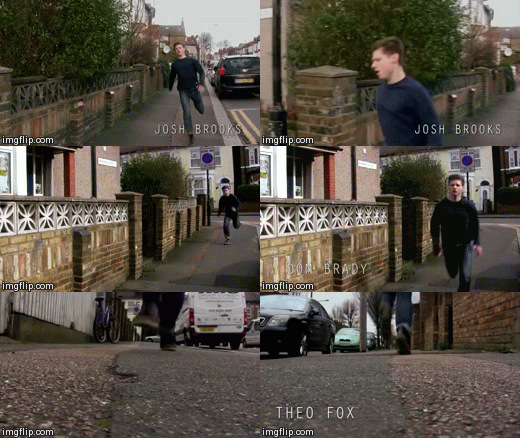
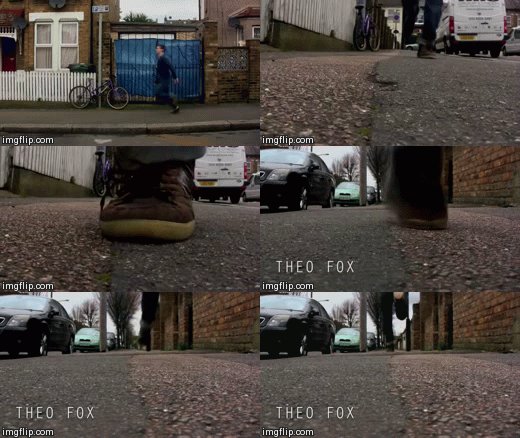
To the left are more successful shots, with a difficult but fairly smooth action match of Dan (me) running around the corner, and below, an even more ambitious shot/reverse shot action match as he runs over the camera, my right foot falling first and then cutting to show my left foot hit the ground one step later. The shot doesn't even break the 180 degree rule, the camera being at the same spot and rotated about 175 degrees in preparation to shoot the other way! However my distance from the wall and position relative to the line in the pavement makes it look a little like the wrong foot lands next even when it is the correct one. 


To the right are two fairly basic mistakes that I must take most responsibility for; the movement of my hands. During the inside shots I failed to completely keep track of where they would be in the next shot, so the fact that we shot indoors with more shots after our practice shoot meant that continuity errors such as my hand/arm position were harder to avoid. The gif below shows a successful action match then right after in the next shot a failed action match where continuity is broken due to my fist going from open to closed. Although less noticeable, it is an error nonetheless -  but has taught me as a director AND as an actor to think about continuity in even more detail.


Jump-shots/30 degree rule

I made a Slideshare presentation to display my learning on this:


Shot/Reverse Shot


The preliminary task taught us how to use shot/reverse shot. One example of its use is mentioned under match-on-action but its main use is to show conversation. We learnt to shoot entire conversations from two opposite sides (as well as other angles) without breaking the 180 degree rule in order for the audience to see both characters speaking, and gauge their reactions in conversation.


Costume/hair etc continuity


Two shots taken in the our test shoot that made it into the final edit


We made sure our actors wore the exact same costume for both our test and final shoots in case we would be able to take some of the best test shots for the real edit, seeing as we used the same equipment to take them. It is almost impossible to tell that the two first shots in our finished sequence came from a separate shoot on another day because of this. My hair had grown slightly since then so we could only use shots where hair isn't really noticeable but fortunately we did not need to. We knew that significant change in hair and costume would be very noticeable by using common sense, and learnt from this that if as much as possible stayed the same we could still achieve a high standard of continuity.


In Summary...

Not including the titles at the beginning and end, our final film opening was only 5 seconds longer in edited, filmed footage than the preliminary task yet used about 20 shots more; around 40 shots compared to around 20 shots in the prelim. This was due to  shooting from more angles and distances and using a lot more cuts. We could be more ambitious and still our continuity was better overall in our final opening sequence due to our learning.


Pre-Production/Planning


We went into the preliminary task with quite insufficient planning, which caused a hindrance into shooting it and how long this took.

  • The script was largely unplanned
  • Our shootboard was insufficient, having too few shots

    This meant:
  • Not knowing shot numbers for the clapperboard, making editing far slower
  • Lots of improvisation on set, eating away a lot of our time

This drilled into us the lesson that planning should be thorough, concise, and not neglected!


Summary
Through this project I feel I have become more comfortable to edit independently and have learnt to rely on teachers/our technician a little less, working out technological issues more independently. While acting I learnt to take more of a role in directing the sequence, as even though I was in shot I was visualising how the shot would look, offering advice and constructive comments to the group members on camera before and after a shot. 


Another of the main points of learning I personally made was working as a team. It was a skill I had some of already through experience in Media Studies but an aspect in which I do not cease to learn - every time I plan, shoot, and edit with a new group of people I learn the individual strengths of each person and help to build the confidence of others in areas where it is not as high, particularly if it is somewhere I feel confident. Our group dynamics turned out to be very effective due to the efforts put in by all of us as a collective, with everyone willing to make sacrifices to help the project run smoothly. With improved skills in directing, planning, editing and other areas, I myself now feel more confident through the experience of this project, and feel my contributions to future projects can be stronger as a result of this.